
"countries and regions"
10000 article(s) found
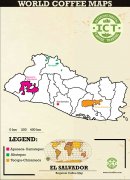
El Salvador coffee bean producing area Santa Ana, the volcanic country of El Salvador coffee cultivation.
Coffee is grown more or less throughout El Salvador (well, after all, it's not that big), but there are seven main areas where coffee is grown, all of which are considered different from each other, mainly in terms of altitude and flavor characteristics. According to PROCAF (the National Coffee Institute), it is arranged as follows: Apaneca-Ilamatepec Mountains: located in the west, from 500 elevations

What are the similar characteristics of coffee produced in different countries?
The most sensible and practical way to understand coffee-producing countries is to classify them into the world's three major coffee growing regions: Africa, Indonesia and Central and South America. Generally speaking, coffee grown in the vicinity has similar characteristics. If a particular bean is out of stock, the manufacturer and buyer of the comprehensive product will usually look for a nearby country. People who make comprehensive products will say: I think
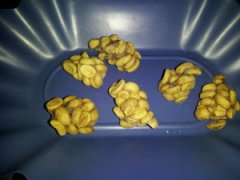
Description of coffee bean flavor introduction to the taste of famous Central American coffee
GuatemalaLaJoyaEstate-Antigua Gem Manor Coffee GuatemalaLaJoyaEstate Central American countries: Guatemala producing areas: Antigua flavor: Antigua Gem Manor, Antigua (Antigua) is a volcanic island located in the southwest of Guatemala, three volcanoes are located in which the island is rich in volcanic soil, coupled with low temperature, low humidity and adequate sun environment at night
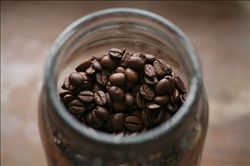
Boutique Coffee Colombia Coffee Plantation Colombia Coffee Region
The world's largest producer of premium coffee! Coffee was first introduced to Colombia in 1808 by a priest from the French Antilles via Venezuela. Today the country is the second largest producer after Brazil, with an annual output of 13 million bags of 60 kg each, compared with Brazil's

A brief introduction to the origin, development, history and culture of Santo Domingo boutique coffee beans with intertwined aftertaste
Dominica coffee is mainly produced in areas such as Cibao in the Central Mountains, the Caribbean and Barahona. There are many large estates in Siwao, and coffee trees are planted with 75% Kaddura and 25% Tibica. In terms of varieties, Baraona is the region with a high proportion of Tibika seeds.

A brief introduction to the origin, development, history and culture of Santo Domingo boutique coffee beans with excellent acidity
The temperate climate in Dominica is conducive to coffee cultivation, and the best places to grow coffee are the Barahona region in the southwest and the Cibao Valley north of Santiago, Dominica's second largest city. The northern region, represented by Hibao, and the southern region, including Okayabani Santo Domingo, produce good coffee. Among them, Santo

A brief introduction to the flavor, taste and aroma characteristics of Santo Domingo coffee beans with excellent acidity
Turning to the introduction of Dominican coffee, the most distinctive features are fresh and elegant, full of particles, excellent acidity and pleasant flavor (two colleagues agree with this). Coffee in Dominica varies slightly in taste according to the altitude of the region where it is grown, with sour but rich taste in the highlands, and less sour and smoother taste in the lowlands. And some Dominican villages

Coffee utensils from which country in the coffee bean producing area
The most sensible and practical way to understand coffee-producing countries is to classify them into the world's three major coffee growing regions: Africa, Indonesia and Central and South America. Generally speaking, coffee grown in the vicinity has similar characteristics. If a particular bean is out of stock, the manufacturer and buyer of the comprehensive product will usually look for a nearby country. People who make comprehensive products will say: I think

A brief introduction to the cultivation of fine coffee beans in Santo Domingo, geographical location, climate and altitude
The temperate climate in Dominica is conducive to coffee cultivation, and the best places to grow coffee are the Barahona region in the southwest and the Cibao Valley north of Santiago, Dominica's second largest city. The northern region, represented by Hibao, and the southern region, including Okayabani Santo Domingo, produce good coffee. Among them, Santo

Flavor description of Costa Rican Coffee Bean introduction to the taste of the regional treatment of manor varieties
Costa Rican coffee bean flavor description manor variety regional treatment taste introduction the volcanic soil in Dariga is very fertile and well drained, making it the first country in Central America to grow coffee and bananas because of its commercial value. Coffee and bananas are the country's main exports. Coffee was introduced into Costa Rica from Cuba in 1729. Today, its coffee industry is the world.

A brief introduction to the description of the flavor, taste and aroma characteristics of Santo Domingo boutique coffee beans
The temperate climate in Dominica is conducive to coffee cultivation, and the best places to grow coffee are the Barahona region in the southwest and the Cibao Valley north of Santiago, Dominica's second largest city. The northern region, represented by Hibao, and the southern region, including Okayabani Santo Domingo, produce good coffee. Among them, Santo

Uganda Coffee Flavor Taste Features History Arabica Robusta Coffee Bean Region
Uganda is one of the major producers of Robusta coffee beans. Some Arabica coffee is also grown in different highland areas of the country, most notably on the slopes of Mount Elgon on the border with Kenya and Mount Rwenzori, commonly known as the Moon Mountain on the border with Kenya. Some Arabica coffee is also available in the northwest of the country in the West Nile region

Which country was Sri Lanka's colony? which country is Ceylon black tea? which brand is good?
There are four major black tea producing countries in the world, namely, China, Darjeeling, Sri Lanka and Kenya. Today, let's talk about Sri Lanka. Sri Lanka is located in the Indian Ocean in the southeast of the Indian subcontinent and covers an area of 6.56 square kilometers. Sri Lanka was once a British colony. Before 1972, the country of Sri Lanka was called Ceylon.

Introduction to the regional treatment method for the characteristics of flavor and taste varieties in Costa Rica Huangmi Coffee Manor
The characteristics of flavor and taste varieties in Costa Rica Yellow Honey Coffee Manor Regional treatment method Coffee was introduced to Costa Rica from Cuba in 1729. Today, its coffee industry is one of the well-organized industries in the world, with an output of 1700 kg per hectare. Costa Rica has a population of only 3.5 million, but there are 400 million coffee trees, and coffee exports account for 25% of the country's total exports.

Uganda description of Ugandan Coffee Flavor introduction to the regional treatment of taste production in manors
Uganda Uganda coffee flavor description manor taste area treatment method Uganda is a tropical African country, its fertile soil, suitable altitude and climatic conditions are suitable for the growth of high-quality coffee. As early as more than a decade ago, the leaders of China and Ukraine had the intention to enhance the trade cooperation and traditional friendship between the two countries through coffee trade. In the concern of the leaders of the two countries and Beijing

Madagerba Coffee Region Nicaragua Coffee Flavor Characteristics
Professional coffee knowledge exchange More coffee bean information Please pay attention to coffee workshop (Weixin Official Accounts cafe_style) Front Street-Nicaragua Coffee Introduction Central America is a land bridge connecting North and South America. There are seven countries, namely Belize, Costa Rica, El Salvador, Guatemala, Honduras, Nicaragua and Panama. Coffee is produced in seven Central American countries, including melons.

El Salvador coffee bean flavor description regional grinding scale of variety production
El Salvador coffee bean flavor description regional grinding scale May 19, 1934, El Salvador announced the establishment of diplomatic relations with Manchukuo, becoming the second country after Japan to recognize the regime. After the outbreak of the Pacific War in 1941, El Salvador joined the anti-axis camp of Britain, the United States and other countries. In April 1944, due to economic paralysis, intellectuals and students

Costa Rican Tarazhu Coffee Bean Flavor description Grinding scale Variety region Taste introduction
Costa Rican Tarazu Coffee Bean Flavor description Grinding scale Variety producing region Tarasu, located in the south of the country's capital, SanJose, is one of the most valued coffee growers in the country. LaMinitaTarrazu coffee is a famous local product, but its production is limited. It is grown on a piece of land called LaMinita.

A brief introduction to the treatment method of grinding degree and baking degree of full-grained Santo Domingo fine coffee beans
The temperate climate in Dominica is conducive to coffee cultivation, and the best places to grow coffee are the Barahona region in the southwest and the Cibao Valley north of Santiago, Dominica's second largest city. The northern region, represented by Hibao, and the southern region, including Okayabani Santo Domingo, produce good coffee. Among them, Santo

El Salvador Coffee Flavor Taste Introduction El Salvador Coffee Region Fine Coffee Beans
Salvadoran coffee accounts for 40 per cent of the country's exports and is picked in November and December and from January to March of the following year. Green bean exports continue almost throughout the year. Coffee is produced in seven of the country's 14 departments, with chalatenango and santa ana in the north-west the most abundant. El Salvador produces 100% Arabica coffee, of which 68% is Arabica.